Start with the meter test
Turn off every fixture and appliance that uses water. Find the water meter and look at the leak indicator, the small dial or triangle that spins when any water moves. If it keeps turning, water is leaving somewhere.
Note the meter reading, wait an hour without using water and read it again. A change means a leak somewhere between the meter and the fixtures. Closing the main valve at the house and watching the meter tells you whether the leak is inside the house or on the service line outside.
Active leak: emergency steps
If water is flowing into a room, treat it as an emergency and call the 24/7 line.
- Close the main water shutoff, usually near the meter or where the line enters the home.
- Turn off the water heater to protect the element or burner.
- Move valuables and open the drain line or low spot to limit damage.
- Photograph the damage before cleanup and keep the receipts.
If the water is near outlets or the electrical panel, stay clear and call an electrician. If you smell gas, leave and call your gas utility or 911.
Signs of a hidden leak
A bill that jumps with no change in use.
Even a small constant leak runs thousands of gallons over a billing period.
Warm floor spots.
A hot-line leak under a slab heats the surface above it.
Sound of running water at night.
Water moving through a pipe when nothing is on.
Stains, bubbling paint or musty odor.
Moisture in a wall or ceiling needs a source.
Low pressure at every fixture.
A service line leak can reduce what reaches the house.
Not sure there is a leak?
Call us and describe what you see. We will tell you if a visit makes sense.
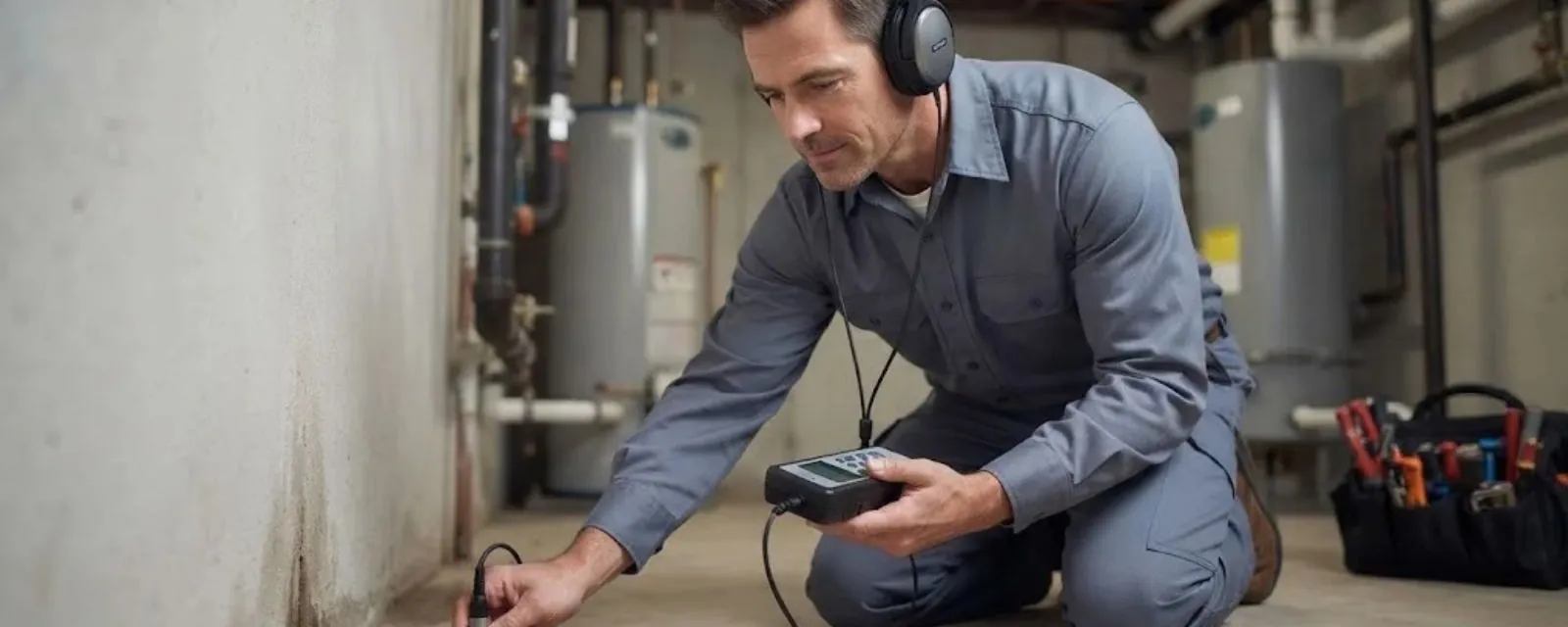
Where leaks hide and how we find them
| Location | Common cause | Method |
|---|---|---|
| Behind walls or ceilings. | Supply line joint or failed fixture. | Moisture meter, thermal camera, acoustic listening. |
| Under a slab. | Pinhole in copper line. | Pressure isolation test and electronic listening. |
| Yard or service line. | Corroded or root-damaged line. | Meter test, tracer gas or listening, then locate. |
| Irrigation system. | Broken head or buried valve. | Zone test and pressure check. |
| Pool or fountain supply. | Fill valve or return line. | Pressure test on supply lines. |
Slab, wall and under-house leaks
Many Greenbelt homes are built on slabs or crawl spaces rather than full basements, and Greenbelt Homes, Inc. notes that only a limited number of its homes have basements. That makes slab leaks and crawl space leaks the common hidden cases in the older housing.
For slab leaks, we isolate each branch of piping, pressurize it and track the sound of the leak to the surface. We mark the spot, explain the repair choices and only then discuss opening the floor. Rerouting a line through the attic or walls is sometimes cheaper than breaking concrete.
For wall and ceiling leaks, a thermal camera and moisture meter narrow the search to a few square feet, so the repair opening is small.
Water bills, meters and WSSC Water
WSSC Water bills customers for water and sewer based on meter readings. If your bill has risen and you cannot explain it, contact WSSC about the reading, then run the meter test above.
A leak inside the home is usually the homeowner's responsibility. WSSC publishes guidance on who maintains which section of a service line, so check it before assuming either side owns the repair. Fixing a confirmed leak promptly also limits the extra cost on your next bill.
Guidelines we follow for leak testing
WSSC Water's own guidance for customers is the dye tablet test for toilets, 15 minutes with no flushing, repeated twice a year. We use the same guideline as our first test, then add meter testing and pressure isolation for lines.
Pressure testing of repaired piping follows the plumbing code WSSC enforces, which requires new work to be tested before it is covered. A repair that has not been pressure tested is only a guess.
What to do before we arrive for a suspected leak
The best first steps cost nothing and help our plumber find the leak faster.
What shapes the cost of finding a leak
Detection is priced by time and method, not by guess.
Want your real number? Many homeowners policies cover the resulting water damage but not the cost of finding the leak. Ask your insurer before the visit and keep your detection report. Call (301) 936-0389 and we will explain the price before work starts.
Frequently asked questions
Yes. When water is actively escaping, call the 24/7 line. We start by getting it shut off, then schedule detection.
Usually. Thermal imaging, acoustic listening and moisture mapping narrow the search to a small area, and we open only that spot.
Add a few drops of food coloring to the tank and wait twenty minutes without flushing. If color reaches the bowl, the flapper is leaking. See toilet repair.
It could be. Run the meter test, then check for a running toilet, a dripping faucet and any irrigation. If the meter still moves, call us.
Yes, on supply lines and zone piping. Pool shell leaks are specialist work that we will refer.
Often not the detection itself, but it may cover the damage. Read your policy or ask your agent before work starts.